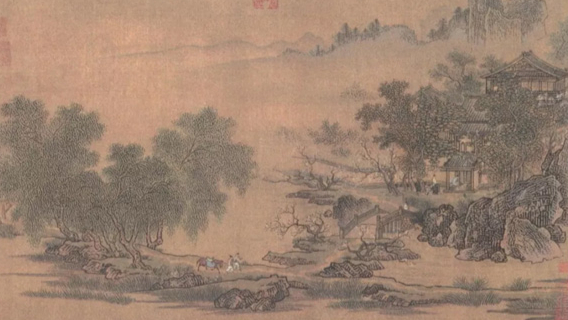
Liu Songnian
Introduction
Liu Songnian, a distinguished figure in Chinese art history, was a master painter of the Southern Song Dynasty, renowned for his elegant landscape paintings. His works, characterized by their refined techniques and aesthetic appeal, have left an indelible mark on the realm of traditional Chinese art. Liu Songnian's most celebrated piece, Landscapes of Four Seasons, demonstrates his mastery in depicting natural beauty and the leisurely life of Southern Song society.
Early Life and Education
Liu Songnian was born in Hangzhou, a city that later became the imperial capital of the Southern Song Dynasty. Growing up in this vibrant cultural and political hub, Liu was immersed in the rich artistic tradition that thrived in the region. Although specific details of his early life and education are scarce, it is likely that Liu received a comprehensive education in the arts, a common practice for aspiring artists of the time. This education would have included training in calligraphy, painting, and poetry, providing Liu with the foundational skills necessary for his future success as a court painter.
Artistic Career
Liu Songnian’s professional journey as an artist was deeply intertwined with the Southern Song Dynasty's imperial court. He served as a court artist at the imperial academy of painting, where his role involved creating works that catered to the aesthetic preferences of the royal family and the court. His appointment to this prestigious position was a testament to his exceptional skill and talent.
Style and Techniques
Liu Songnian was renowned for his sophisticated style and techniques, which exemplified the aesthetic values of the Southern Song Dynasty. One notable aspect of his work was his ability to create realistic and highly expressive paintings that seamlessly blended lifelike representation with artistic expression. His landscapes often depicted the serene beauty of nature, infused with a poetic quality that captured the essence of the Southern Song era's cultural and philosophical ideals.
Liu's style reflected a shift from the panoramic-view structure that characterized Northern Song paintings to a more focused and intimate composition. This approach highlighted the delicate interaction between substance and void, a hallmark of Southern Song aesthetics. In his paintings, Liu skillfully layered elements of the landscape, such as mountains, rivers, and forests, to evoke a sense of depth and infinity. His use of white space was deliberate, accentuating the beauty of his subjects and inviting viewers to immerse themselves in the tranquil and harmonious worlds he created.
Major Works
Among Liu Songnian's most acclaimed works is Landscapes of Four Seasons, a painting that vividly illustrates the natural scenery and the leisurely lifestyle of the Southern Song elite. This piece, divided into four sections, captures the essence of each season and the human activities associated with them. The painting's elegance and technical finesse have made it a quintessential example of the Southern Song imperial painting academy's output.
Influence and Legacy
Liu Songnian's contributions to Chinese art have had a profound and lasting impact. As one of the "four great painters of the Southern Song Dynasty," alongside Li Tang, Ma Yuan, and Xia Gui, Liu played a pivotal role in advancing the academic painting style of his era. His innovative techniques and distinctive approach to composition influenced not only his contemporaries but also generations of artists who followed.
Liu Songnian's legacy is evident in the ongoing appreciation and study of his works. His paintings continue to be celebrated for their artistic merit and their ability to convey the philosophical and cultural ethos of the Southern Song Dynasty. By bridging the past and present, Liu's art serves as a cultural touchstone, inspiring modern creators to explore the rich tapestry of Chinese artistic traditions.
Historical Context
The Southern Song Dynasty was a period marked by significant cultural and artistic achievements, despite the political challenges the dynasty faced. Following the fall of the Northern Song to the Jurchen-led Jin Dynasty (1115-1234), the Song court reestablished itself in the south, with Hangzhou as its new capital. This relocation brought about a flourishing of arts and culture, as the court sought to assert its legitimacy and cultural superiority.
During this era, the Southern Song Dynasty became renowned for its advancements in landscape painting, a genre that reached new heights of sophistication and expression. Artists like Liu Songnian were at the forefront of this artistic evolution, contributing to the development of a style that emphasized natural beauty, tranquility, and the philosophical ideals of Confucianism and Taoism.
The historical context of Liu Songnian's time also influenced the themes and subjects of his work. The Southern Song court's emphasis on cultural refinement, coupled with the serene landscapes of the Jiangnan region, provided a rich source of inspiration for Liu and his contemporaries. Through their art, they sought to convey the harmony between humanity and nature, a central tenet of Chinese aesthetic philosophy.
Gallery
This section would ideally feature images or descriptions of Liu Songnian's paintings, such as Landscapes of Four Seasons and other notable works. However, since this text-based format does not support the inclusion of images, it can instead provide descriptions or details about specific pieces, highlighting their significance and key features.








